Читайте также
12/18/2026
Проводили уходящий год
11/28/2026
Майкопский государственный технологический университет вновь стал площадкой Всероссийского образовательно-развлекательного флешмоба «Контрольная по математике для взрослых и не только MathCat».
11/27/2026
Студентка МГТУ вошла в число 60 сильнейших финалистов всероссийского конкурса «Провизионеры.РФ»
Читайте также
«To teach in order to save»: an interview with a lecturer at the Faculty of Medicine of Maykop State Technological University
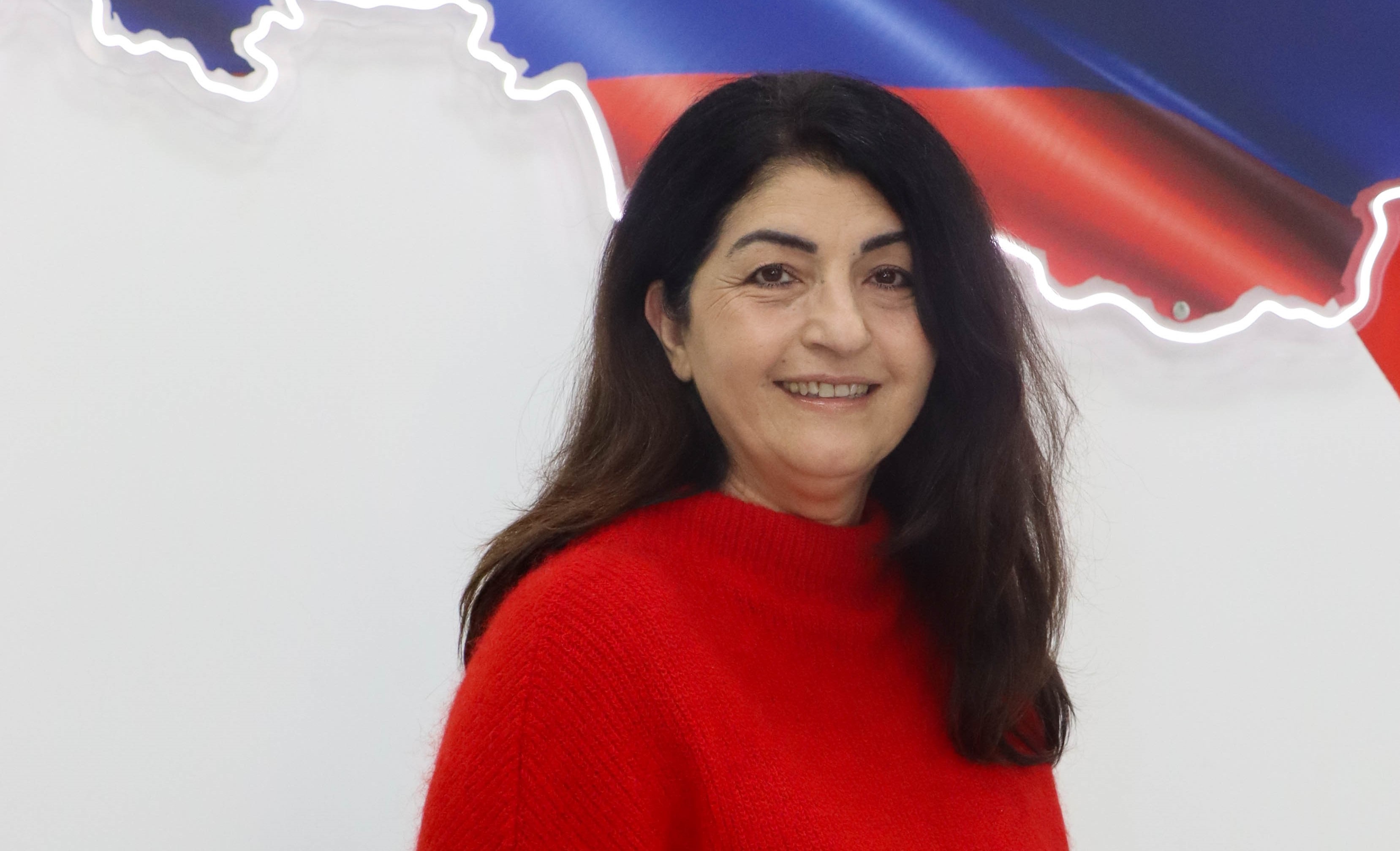
An inspiring interview with Ghada Mashkhur Dandash, a lecturer at the Faculty of Medicine and a graduate student of Maykop State Technological University, dedicated to the Day of Russian Students. In this conversation, she talked about her path in medicinal field, shared tips for students and revealed the secrets of success in school and life.
Tell us a little about yourself and how you decided to connect your life with medicine.— My name is Ghada Mashhur Dandash. I am a postgraduate student at Maykop State Technological University with a degree in Pharmaceutical Chemistry and Pharmacognosy and a lecturer at the Faculty of Medicine. The decision to link my life to medicine was no coincidence. Our family has always paid great attention to the study of plants and their medicinal properties. This can probably be called a family tradition. But when I was young, I had completely different interests — I wanted to become an engineer, because I really liked mechanics. Over time, I realized that I was interested in medicine, especially its connection with nature. I wanted to understand how everything works, what can be done to improve people's health. This interest intensified over the years, especially when I discovered chemistry, biochemistry and pharmacology — they literally became my favorite disciplines.
Share the details of your life. How did you end up in the USSR?
— I'm originally fr om Lebanon, but I almost completely graduated fr om high school in Argentina. The war forced my parents to leave, and we lived in different parts of this country: in Buenos Aires, Tucuman, Mendoza. After returning to Lebanon, I completed my last year of school and passed the exams in Arabic and French. At first, I wanted to study in France, but fate brought me to the Soviet Union. It was 1986, and I got into the Kharkiv State Pharmaceutical Institute, from which I graduated with honors. After completing my residency, I wanted to go to graduate school, but for family reasons I had to leave for Lebanon. I returned to Russia after 32 years. I can say that my life has been full and varied.
What surprised or inspired you the most about living in the USSR?
—Most of all, I was impressed by how people here accept you. The Russian character is special: it takes time to earn trust, but at the same time you feel a sense of comfort and goodwill immediately. Personally, I have never felt like a foreigner in Russia — neither in the USSR, nor now. This is an amazing quality that makes Russia truly hospitable.
How did you adapt to the new culture and language environment when you first arrived?
—The first semester was not easy. But I was very lucky to have a teacher at the preparatory faculty, Margarita Nikolaevna. It was her last year before retiring, and I still remember her with gratitude. She supported us as a mom, always helped and took care of us. The adaptation concerned not only the language, but also everyday moments. For example, it seemed strange to many of us that fish soup was served for breakfast in the dining room, but I quickly got used to it and even fell in love with local traditions. For me, adaptation is not just about survival, but the ability to absorb new things. As Albert Einstein said, «The measure of intelligence is the ability to adapt and change.» Life in Russia provided food for both soul and mind: theaters, libraries, sports, concerts — all this was available to students, which helped me not only adapt, but also fall in love with this country.
Your education at Kharkiv University ended with honors. Tell us what was the most difficult and most inspiring thing during your years of study.
— The most difficult thing for me was that I was initially preparing to study engineering, not medicine. For example, I knew chemistry very superficially, but I didn't study biology at all. When I entered the preparatory faculty, I had to start from the very basics. Of course, it was scary, especially when combined with learning Russian, which was completely new to me. But over time, I realized that I can overcome any difficulties if I put enough effort into it. I realized that I was ready to stay up at night not for grades, but to fully master the material and prove to the teachers that I was worthy of being a respected student. The most inspiring thing for me was the learning process itself: conducting experiments, offering ideas, and realizing that these ideas work and can be useful. The institute, the teachers, my work on myself — all this has become a real «golden time».
Which of the teachers had a special influence on you?
— My teachers from the Kharkiv State Pharmaceutical Institute — Evgeny Yakovlevich Levitin, Svetlana Grigorievna Leonova, Svetlana Methodievna Drogovoz — became an example and a source of inspiration for me. They sparked my love for science and made it clear that studying is more than just knowledge. Now, as a graduate student at Maykop State Technological University, I see how much effort my colleagues are putting in. I respect them all and believe that MSTU has a great future.
How did you find out about Maykop State Technological University and why did you choose it for postgraduate studies and teaching?
— I learned about Maykop State Technological University from Dr. Ayham Akhmar, who told me about Maykop and the university. Later, at a conference at the Russian House in Lebanon, I met Fatima Abrekovna Pafova, Dean of the International Faculty of Maykop State Technological University. She talked so enthusiastically about MSTU, its youth and potential that I decided: this is my place. If the university is young, it means that there is a huge field for creativity, research and new beginnings. I like complex tasks, so I entered the postgraduate program of the Maykop State Technological University in the field of Pharmaceutical Chemistry, Pharmacognosy.
What are your favorite places in Maykop?
—I recently discovered Asi Eutykh's «Golden Storeroom». This is an amazing place with a unique atmosphere. The jewelry created in her style combines exoticism and Adyghe folklore. I was even given some jewelry, which I now wear with great pleasure. I also love walking in the city park, especially near the river. The Rufabgo waterfalls have also left an indelible impression with their natural beauty. There I found a garlic-scented plant that I plan to explore if I stay in Russia for enough time.
Tell us about teaching at MSTU. What does it feel like to teach subjects in English at a Russian university?
— First of all, I would like to express my gratitude to the staff of the Faculty of Medicine for the warm welcome. This is especially important when you are in a new place. Teaching in English is a challenge that I enjoy. I believe that medicine is a profession without borders. A doctor can work anywhere, so the opportunity to study in English is a huge plus for international students. This demonstrates the unique Russian mentality, caring for students and their future, even if they do not stay in Russia after graduation. I am pleased to be a part of this system that helps people learn and develop on a global level. I hope that in the future I will be able to offer my author's programs, which I am developing as part of colloquiums for students from Lebanon, France, America, and Canada.
What skills and knowledge do you think are most important for modern medical students?
— Nowadays, medical education requires much more than just knowledge of disciplines. Students should understand technology, work with equipment, and understand the physics of processes. Modern medicine is a synthesis of science and technology. I always tell my students that diagnosis by symptoms is already the last century. Now the doctor must be able to use complex devices and rely on accurate data. Without this, it is impossible to become a good specialist.
Name the top 3 qualities that will help students to be successful in medicine.
—I'll say this: «Responsibility, responsibility, and responsibility again.» Everything else is just details.
How do you keep students interested in studying medicine? How do you motivate them?
— From day one, I tell students that their lives will change in the next six years. Studying will be their top priority. It takes sacrifice, but the result is worth it. After all, they will eventually become people who are trusted with the most valuable things — health and life. I also try to motivate them through respect: I address them as future colleagues. They need to see that their choice is important and that I respect them for that choice. The main thing is the desire to learn and constant curiosity. There are many tools available today to learn more than what is written in textbooks, and I encourage them to use them.
Do you teach only to international students?
—Yes, only foreign ones. I had a great desire to work with students of the Faculty of Pharmacy, but now there is not enough time for this. I'm actively doing research for my PhD thesis, and it's taking up most of my time.
Then let's talk about your scientific work and achievements. What topics in science are you particularly interested in? What kind of research are you doing now?
— I am currently studying medicinal plants such as wild carrots and angelica. Together with my supervisor, Ifrat Nazimovich Zilfiqarov, Doctor of Pharmaceutical Sciences, Professor of the Russian Academy of Sciences, we are investigating their chemical composition, morphological features and developing new extraction methods. My goal is to find ways to use these plants to create effective drugs. The work is difficult, but it gives great satisfaction. Besides, knowing five languages helps me to study international experience and bring something new to our research. Of the achievements, I would like to highlight one point — participation in the development of the drug «Urohol», which is officially registered in the Russian Federation and is already sold in pharmacies in the country. The opportunity to contribute to the creation of this drug was a significant achievement for me.
What are your plans for the future?
— I want to continue my research, teach students and help them develop. Medicine is a field wh ere there is always something new. I hope that my developments and research will help improve people's quality of life. I would also like to continue working with international students — it enriches both me and them. After all, studying is not only about knowledge, but also about human connections.
Our interview is timed to coincide with the Student's Day. In this regard, what would you like to wish our students?
— You are the future, you are the youth, you are our continuation. The development of humanity depends on you. Whatever you choose, wherever you are, do it with love. If you don't love your business, don't be afraid to look for something that will truly be yours. Don't be afraid of the teacher's assessment, be afraid of your own assessment. Every day, try to make the person you see in the mirror respect you. This is what will help you become not only good experts in your field, but also truly wonderful people.
из