Читайте также
Читайте также
Discovering the city together
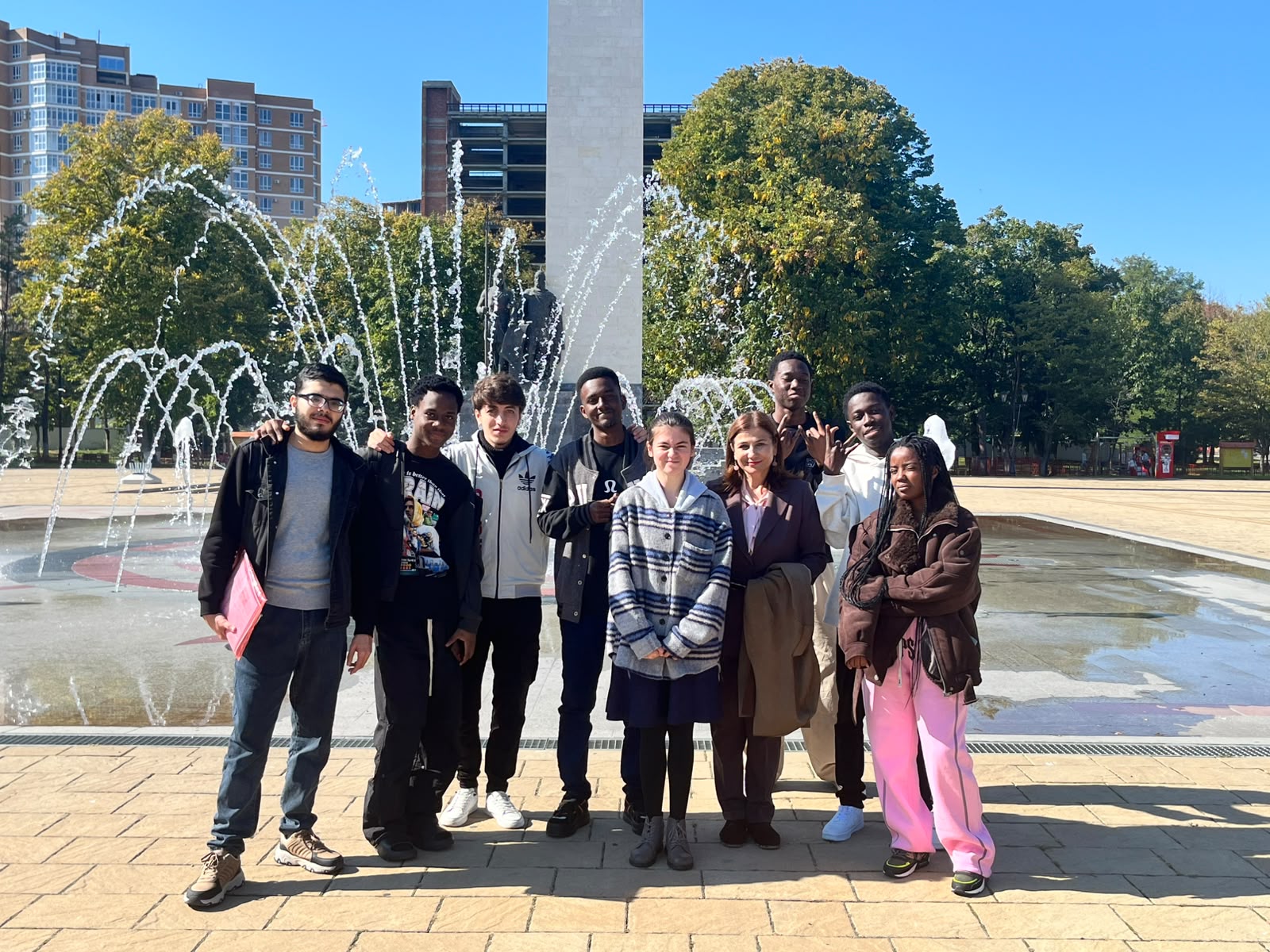
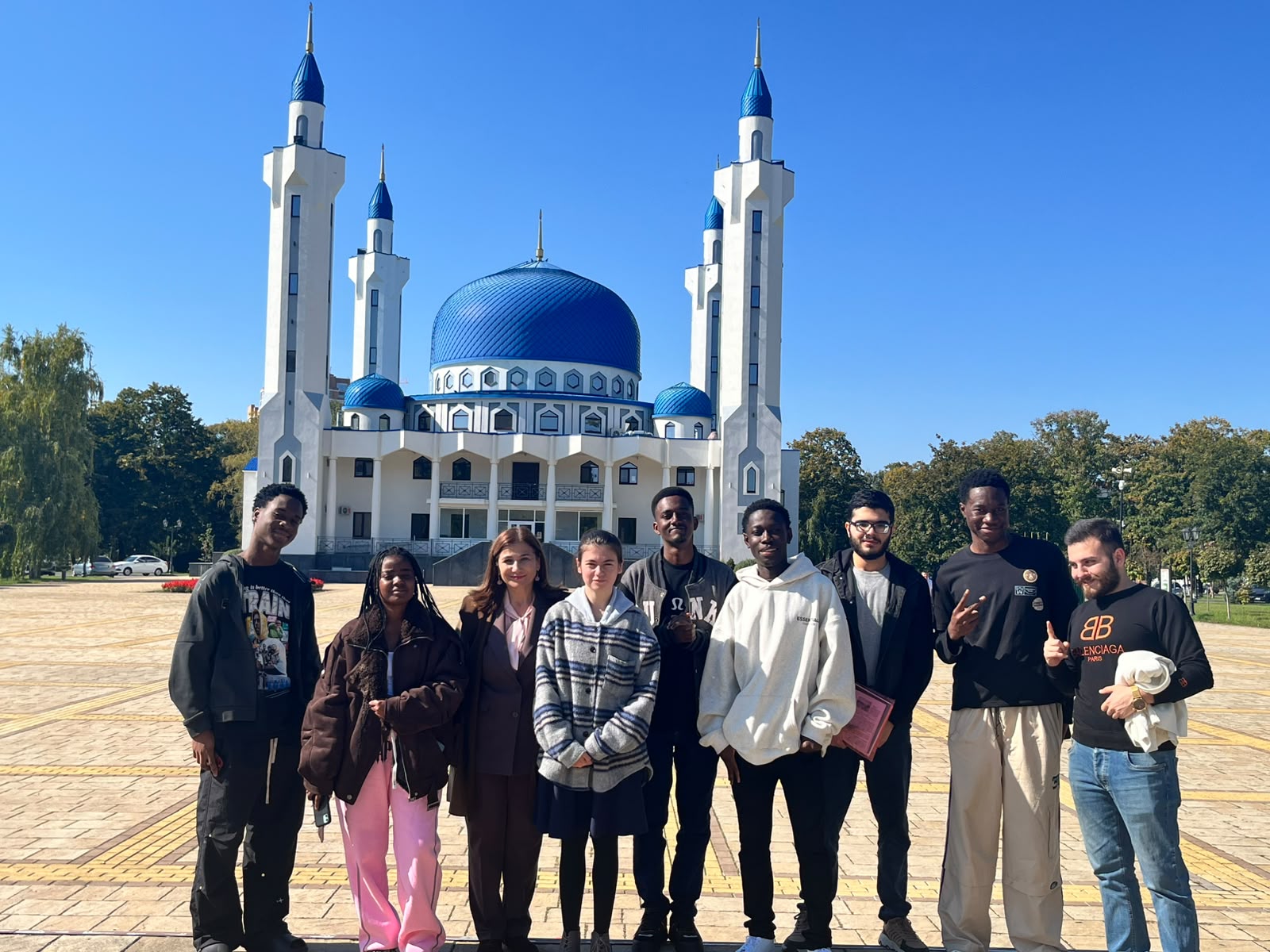
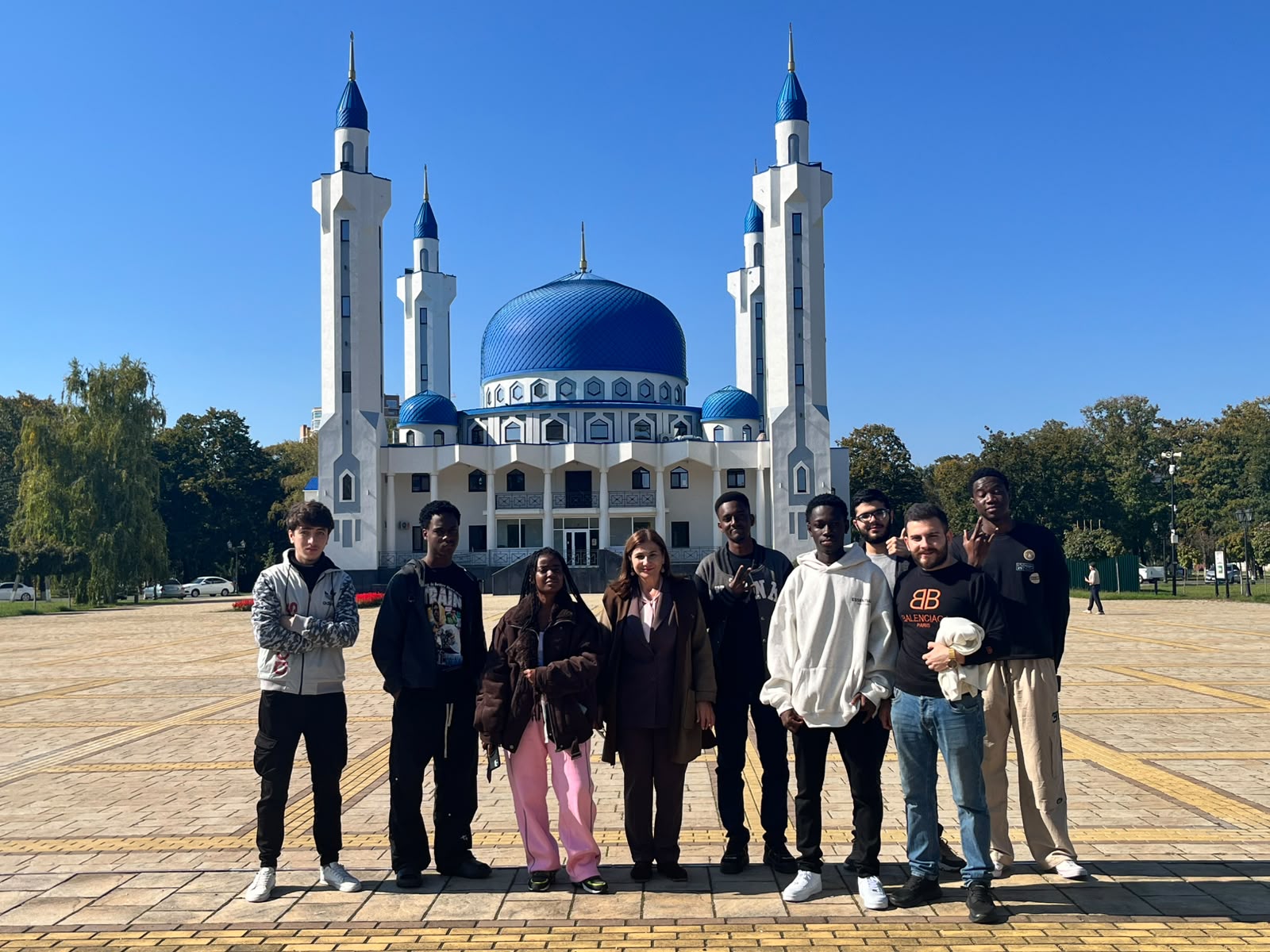
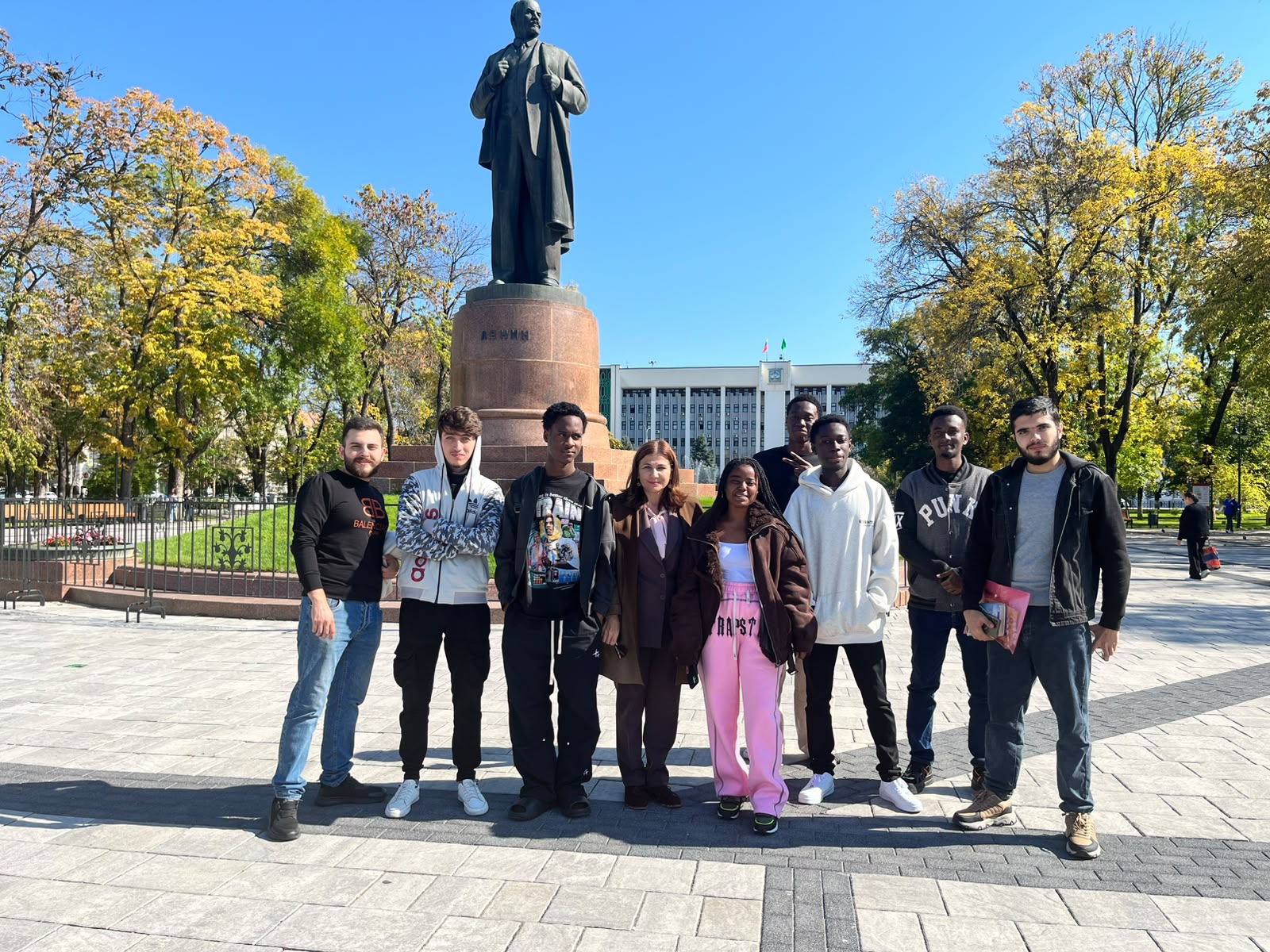
On October 8, international students of the preparatory department of MSTU took an educational tour of the historic center of Maykop. It was an excellent opportunity not only to get to know the city but also to actively practice Russian in real-life communication situations.
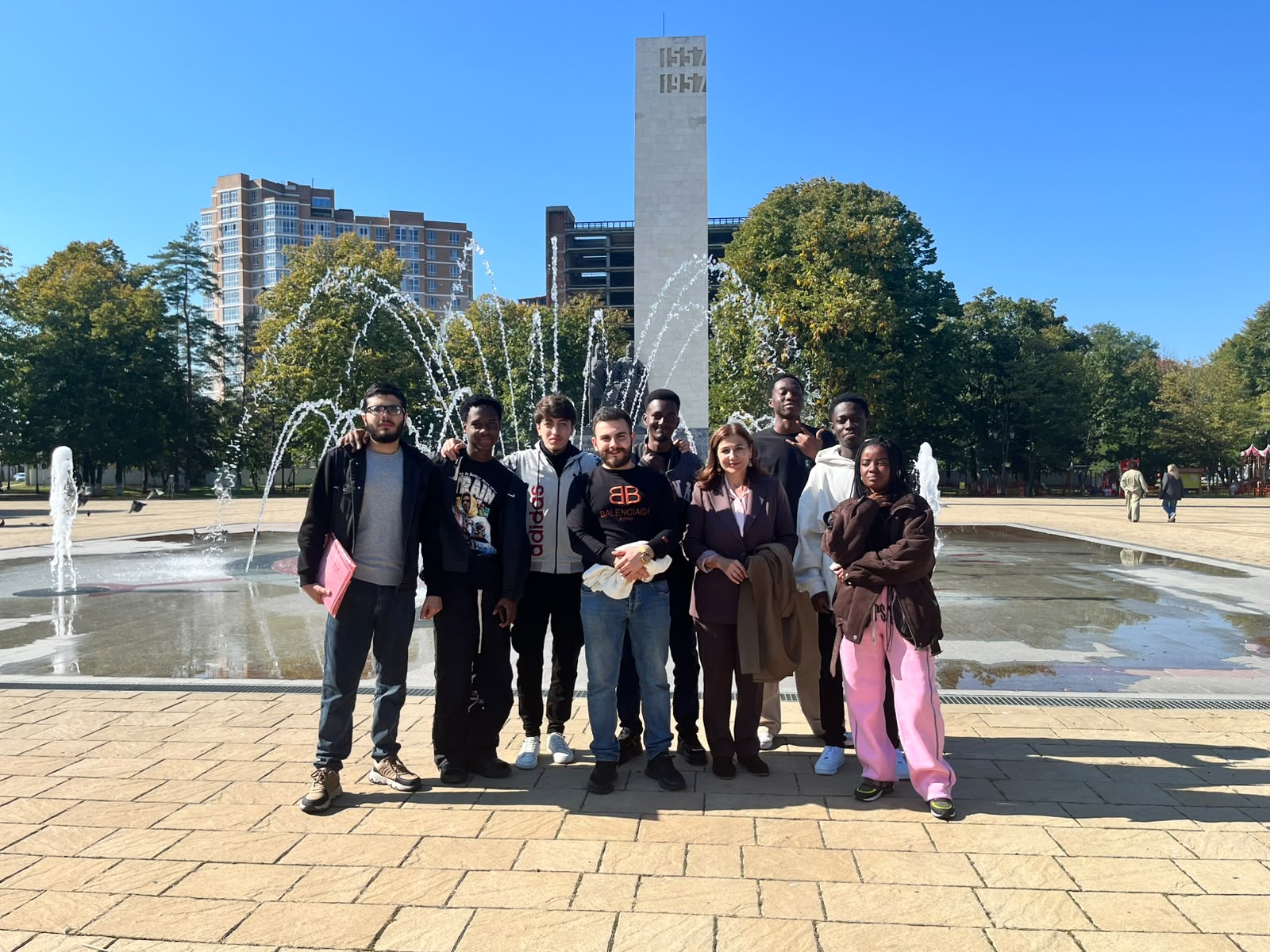
The route was carefully planned to showcase the city's most notable landmarks while providing plenty of opportunities for discussion, fr om architecture to local traditions. The group began their walk at Druzhba Square, one of the city's main public spaces. There, the students took note of the monumental structures and the symbolic meaning of the architectural ensemble, while their teacher helped them put their impressions into words: «I like the square because it is spacious and bright» and «It is peaceful here, you just want to stand and look around».
The next stop was the National Museum of the Republic of Adygea.
The walk continued along the pedestrian section of Pervomayskaya Street, one of the oldest streets in the city. The students learned to pay attention to details, including historic building facades, memorial plaques, and shop signs. Their teacher, Bzegezheva Larisa Kazbekovna, Associate Professor in the Department of Russian as a Foreign Language, gave them short assignments, such as «Find three Art Nouveau buildings», «Write down the names of five shops», and «Describe what you can see to your right». These activities help develop observation skills and expand students' active vocabulary.
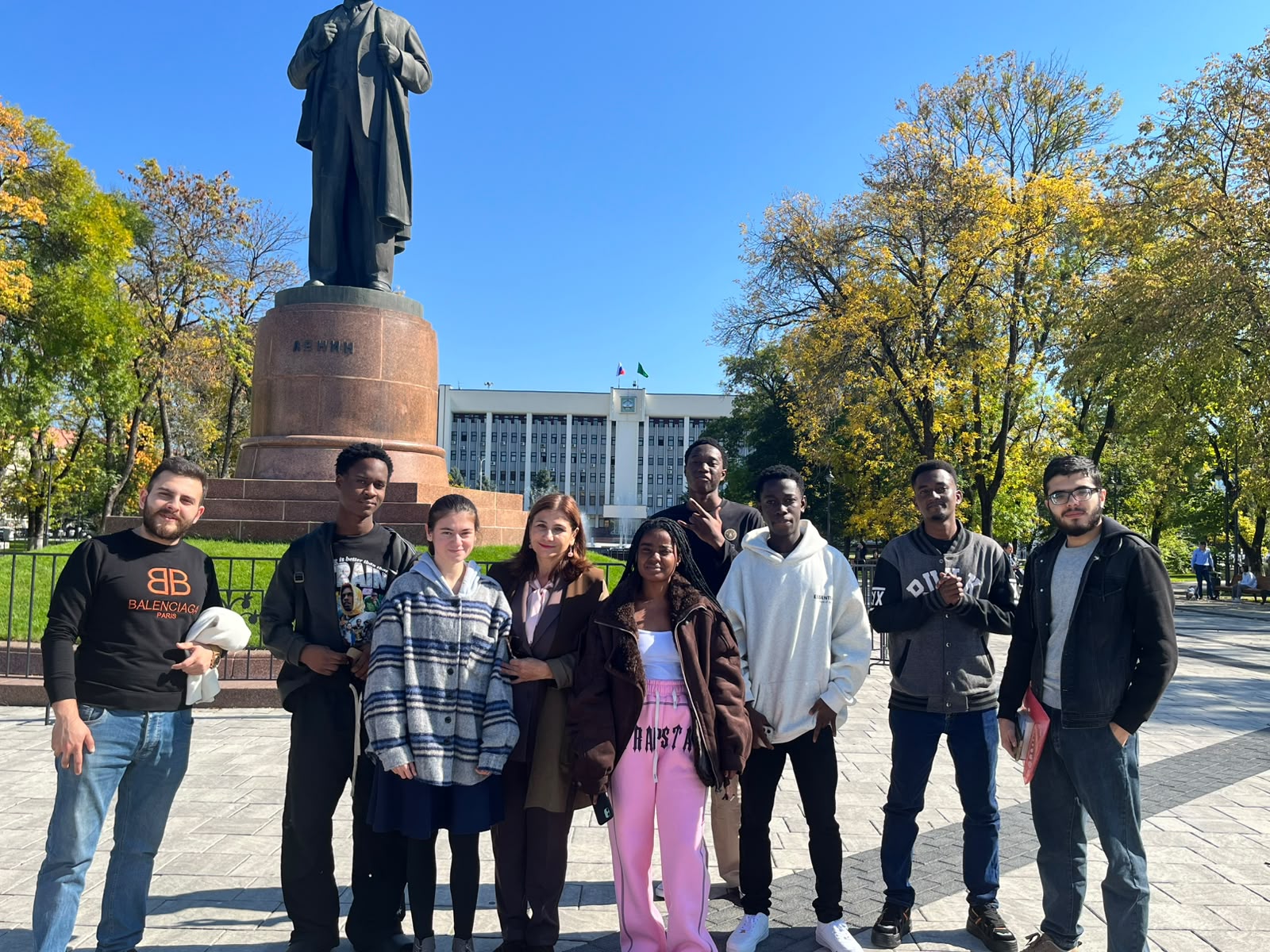
An important stop along the route was the Monument to Unity and Concord, a symbol of interethnic harmony in the republic. The group not only took commemorative photographs but also discussed the significance of the monument. The teacher posed simple questions to encourage conversation, such as «Why do you think the monument was given this name? » and «What do you think the flame at the center of the composition represents?». These questions encouraged students to express their thoughts coherently and exchange opinions.
The tour concluded at the city park, wh ere the students had time for informal conversation, a recap of the day, and reflection. They were invited to share their most memorable impression of the day and one new word they had learned. Their responses included: «The museum was the highlight for me. I learned many new words related to history and the past» and «I remember the word “традиция” (tradition). Now I understand how to use it».
For the teacher, such an excursion serves both as a lesson and as a way to assess students' progress. It provides an opportunity to observe how they construct sentences spontaneously, which grammatical structures they find more challenging, and where they have gaps in their vocabulary. For the students themselves, it is a chance to feel part of the city, overcome language barriers, and discover that Russian is not just a subject studied through textbook exercises but a living tool for communication.
The excursion was an engaging and rewarding experience. The city became more than just a collection of landmarks: it became a place for language practice, exploration, and new discoveries.
из